Deck cadets and qualified deck personnel preparing for officer-of-the-watch responsibility.
 Maritime SupportAgency
Deck operational-level guide
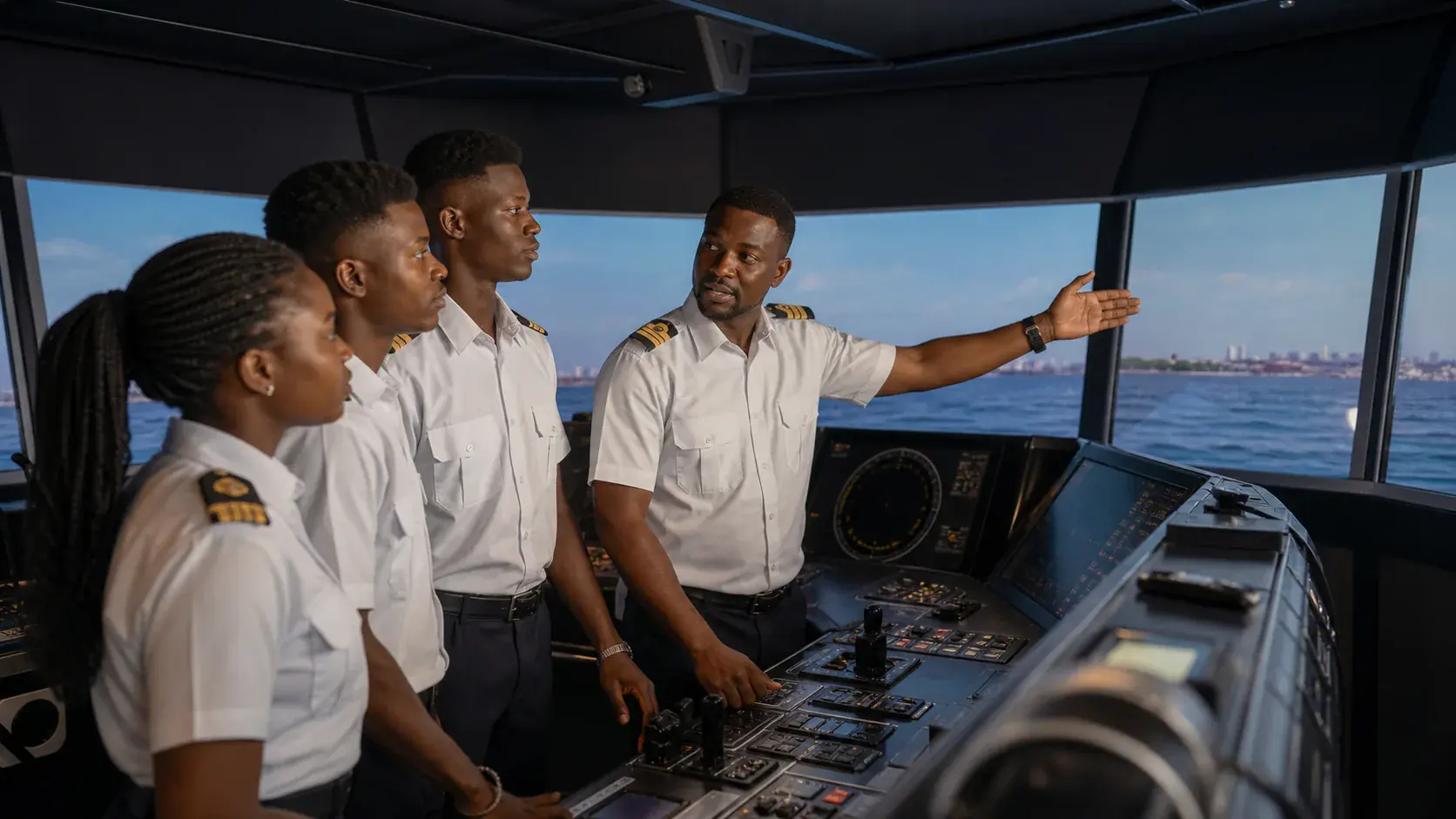
Officer of the Watch: your first deck-officer competency.
The bridge-watch route for deck cadets progressing to officer in charge of a navigational watch on ships of 500 GT or more.
Ghana-focused working guide reviewed 22 August 2026. GMA, the issuing administration, approved institution, or medical examiner makes the official decision.
Eligibility to sit the GMA assessment for officer in charge of a navigational watch, subject to the approved training route and evidence.
We can research, organise, pre-check, and coordinate. We cannot issue the certificate, declare medical fitness, guarantee eligibility, or alter an authority's decision.
Understand the route
The pathway and its requirements.
Read the branch that matches the department, capacity, and vessel limitation. Where both branches appear, they are alternatives—not a combined qualification.
01
Structured training programme
Approved cadet route
The published route combines approved education with onboard training recorded in an approved training record book.
- 1
Be at least 18 years old.
- 2
Complete at least 12 months approved seagoing service as part of the approved training programme.
- 3
Perform at least six months of supervised bridge-watchkeeping duties during the required service.
- 4
Meet radio-duty, approved education, competence, medical, and examination requirements.
02
Prior sea-service route
Alternative service route
The published instrument also describes an alternative requiring at least three years approved sea service, subject to GMA acceptance.
- 1
Provide complete and verifiable deck-department service records.
- 2
Show the required supervised bridge-watchkeeping evidence.
- 3
Complete any education, training, radio, and ancillary requirements assigned by GMA.
- 4
Obtain the Notice of Eligibility before attempting the examination.
Evidence file
What to gather for a proper pre-check.
The final list remains case-specific, but these records normally allow the route to be assessed without relying on memory or verbal assurances.
- 01Training record book
- 02Discharge book
- 03Deck sea-service testimonials
- 04Approved training certificates
- 05Radio/GMDSS evidence where applicable
- 06Valid medical fitness and identity
From file to decision
A responsible working sequence.
- 01
Choose the accepted route
Confirm whether the approved cadet programme or alternative service route applies to the candidate.
- 02
Prove bridge watchkeeping
Separate general deck service from supervised navigational-watch duties and obtain proper testimonials.
- 03
Complete education and ancillaries
Close training gaps, including radio duties and any courses identified during eligibility review.
- 04
Sit written and oral exams
Use the Notice of Eligibility to enter the GMA examination process.
Check before you commit
Important watchpoints.
- Deck service must be in the deck department.
- A record book with missing signatures or inconsistent dates can delay confirmation.
- Near-coastal and under-500-GT routes have different limitations and should be assessed separately.
Official source desk
Confirm the current rule.
These links are provided so clients can distinguish MSA's explanation from the source that governs or administers the requirement.
Maritime requirements can change and may depend on certificate history, nationality, issuing administration, vessel flag, tonnage, propulsion power, voyage area, training route, medical findings, and accepted sea service. This page is educational preparation, not an eligibility letter or legal guarantee. Confirm the current requirements with the responsible authority before enrolling, paying, travelling, or relying on a deadline.
Turn the guide into your checklist
Let's review your actual evidence.
Tell us your department, current certificate, service history, and intended capacity. We will identify the questions that need official confirmation.
Request a pathway review